Building an integrated framework for peace
The World Council of Religious Leaders, an independent body, works to bring religious resources to support the work of the United Nations in our common quest for peace.
Mission
To serve as a model and guide for the creation of a community of world religions, inspiring people of all faiths in the pursuit of peace, justice, and mutual understanding.
The United Nations
We undertake initiatives to bring the spiritual resources of the world's religious traditions to assist the United Nations in the prevention, resolution, and healing of conflicts.
Shared Values
By promoting the spiritual values shared by all traditions, the Council helps develop the inner qualities and external conditions for a more peaceful, just, and sustainable world.
From the Millennium World Peace Summit
The World Council of Religious Leaders was founded in the wake of the Millennium World Peace Summit, convened at the United Nations General Assembly in 2000 — the first gathering of its kind to bring senior religious leaders from across the world's traditions into the heart of the UN.
The Council was formally launched in Bangkok on June 12–14, 2002, at Buddhamonthon and UNESCAP, where participants adopted a Charter outlining the key areas in which religious leaders can play an active role in reducing conflict and addressing the critical needs of humankind.
In the decades since, the Council has convened summits, dialogues, and missions that build trust across traditions and offer moral leadership in moments of crisis — translating shared values into practical action on the defining challenges of our time.
A framework for the work of peace
Preamble
As religious and spiritual leaders of the world forming the World Council of Religious Leaders, we believe that religion can serve as a positive force for achieving world peace, that conflicts among religious and spiritual groups are avoidable, and that harmony among them is to be consistently promoted through active discussion and dialogue.
We believe it is our responsibility to work together to remove all causes of tension among our communities — to lead our followers to accept differences, to maintain self-respect, and to live in harmony with the diverse communities of the world and with humankind in general.
With these ends in view, the World Council is formed as an independent body — a resource to work in collaboration with the United Nations and other international and national organisations dedicated to peace, harmony, mutual respect, and social and economic justice.
Structure
The World Council
Headquartered in New York City, composed of eminent religious and spiritual leaders from the member states of the United Nations.
Regional Councils
Located alongside the regional offices of the UN, working with pre-eminent religious leaders and established networks across each region.
National Councils
Situated in member countries of the United Nations — autonomous bodies linked to the World Council and convened by national religious leadership.
Functions
The Charter vests the Council with the following functions and powers:
- 01Promote religious and spiritual harmony across traditions.
- 02Prevent and resolve tensions and potential conflicts connected with religion and culture.
- 03Promote respect for women and children and care for the vulnerable in society.
- 04Work for the active promotion of mutual respect and the preservation of religious diversity.
- 05Take constructive measures to resolve conflict, promote reconciliation, and foster healing in areas of conflict.
- 06Seek methods to reduce poverty and promote sharing and compassion in support of the UN's poverty reduction goals.
- 07Promote an environmental ethic to reverse degradation and mobilise faith communities around sustainability and respect for all life.
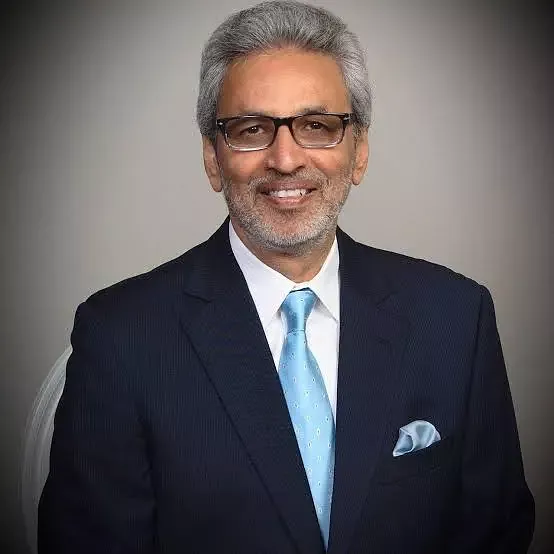
His Excellency Bawa Jain
Secretary General, World Council of Religious Leaders
H.E. Bawa Jain is a trailblazer in global leadership and religious diplomacy, making waves from the United Nations to the World Economic Forum. He kicked off his journey as the Secretary-General of the Millennium World Peace Summit, where he brought together more than 1,200 religious leaders from 120 countries in a groundbreaking event at the UN. Later, as the co-founder of the Religious Initiative at the World Economic Forum in Davos, he championed interfaith dialogue on the world stage.
Jain's impact doesn't stop there. He founded the World Council of Religious Leaders, an organization dedicated to using religious resources to solve global problems. Today, he heads The Centre for Responsible Leadership, where he brings together global thought leaders to tackle today's biggest challenges without partisan divide. His initiatives promoting non-violence and peace celebrate icons like Mahatma Gandhi and Martin Luther King Jr., through meaningful awards and global movements.
H.E. Bawa Jain is also a prolific writer and a sought-after speaker, continuously shaping international conversations on spirituality, leadership, and peacebuilding. His insights have been featured in global media and top publications. Jain's work seamlessly bridges faith, governance, and societal issues, establishing him as a forward-thinking leader in the 21st century.
Eminent leaders convening the world's traditions
The Council brings together senior religious and spiritual leaders from across the major faith traditions, supported by a global advisory community.
Co-Chairs
His Excellency Dr. Mohammad bin Abdul Karim Al-Issa
Secretary General of the World Muslim League, Saudi Arabia
His Excellency Dr. Mohammad Mahdi Tashkiri
President of the Islamic Culture and Relationship Organization of the Islamic Republic of Iran
Sephardic Chief Rabbi Yitzhak Yosef
Chief Rabbi of Israel
Ashkenazi Chief Rabbi David Lau
Chief Rabbi of Israel
His Holiness Vijayendra Saraswati
The Shankaracharya of Kanchipuram, India
His Holiness Somdet Phra Ariyavongsagatanana IX
Supreme Patriarch, Kingdom of Thailand
Most Venerable Li Guangfu
President of the China Taoist Association, China
Board
His Holiness Swami Avdeshananda Giri
Chair of the Board — Maha Mahamandleshwar, Pithadishwar Juna Akhada, India
H.E. Bawa Jain
Secretary General, World Council of Religious Leaders, USA
Venerable Shi Ming Yi
Director General; Abbot, Foo Hai Ch'an Monastery, Singapore
His Grace Thabo Makgoba
Anglican Archbishop of Cape Town, South Africa
His Beatitude Pierbattista Pizzaballa
Latin Patriarch of Jerusalem
Chief Rabbi David Rosen
President, International Jewish Committee for Inter-Religious Consultation; International Advisor to the Chief Rabbinate of Israel
Chief Oren Lyons
Chief, Onondaga Nation
Most Venerable Phra Dharmakosarjan
Rector, Mahachulalongkornrajavidyalaya University, Thailand
His Eminence Nikitas Loulias
Archbishop of Thyateira and Great Britain
Swami Parmatmananda Saraswati
Secretary General — Convener, Hindu Dharma Acharya Sabha, India
Rabbi Arthur Schneier
President, Appeal of Conscience Foundation, New York, USA
Senior Advisors
His Eminence Francis Cardinal Arinze
Former President, Pontifical Council for Inter-Religious Dialogue
His Excellency Dr. Abdullah Omar Nasseef
Secretary General, International Islamic Council for Dawa and Relief; former Secretary General, Muslim World League
His Excellency Ayatollah Abdollah Vaeze Javadi Amoli
Member of the Assembly of Experts for the Constitution, Iran
His Excellency Mr. Budimir Loncar
Former Minister of Foreign Affairs of Yugoslavia
Dame Jane Goodall, PhD, CBE
UN Messenger of Peace; Founder, The Jane Goodall Institute
Lord Jonathan Sacks
Former Chief Rabbi of the United Kingdom
Her Excellency Gillian Sorenson
Former Assistant Secretary General, United Nations
His Excellency Sheikh Ahmad Badreddin Hassoun
Grand Mufti of Syria
His Excellency Dr. Karan Singh
Member of Parliament, India
His Excellency Mr. Kenneth Kaunda
Former President of the Republic of Zambia
Many traditions. One human family.
The Council convenes leaders from fourteen living traditions — each with its own teaching, each with a seat at the table.
Press and media enquiries
Journalists can find Council statements, releases, and media resources on our Press page, along with a form for interview and accreditation requests.
Visit the Press pageThe Gandhi–King Award for Nonviolence
Presented by the World Movement for Nonviolence, the Gandhi–King Award is the leading international honour for promoting the principles and practices of nonviolence in daily life — given in honour of Mahatma Gandhi and Dr. Martin Luther King Jr.'s contribution to world peace and justice.
The World Movement for Nonviolence was founded by H.E. Bawa Jain in 1998 to raise awareness of the critical importance of practising peacefulness, and has forged partnerships with individuals and organisations in more than 140 cities across America and over 60 countries.
“We may never be strong enough to be entirely nonviolent in thought, word and deed. But we must keep nonviolence as our goal and make steady progress towards it.”
Recipients
- 1999
Kofi Annan
Secretary-General of the United Nations
- 2000
Nelson Mandela
Former President of South Africa
- 2001
Jane Goodall
World-renowned scientist and writer
- 2002
Mata Amritanandamayi
Internationally recognised spiritual teacher